
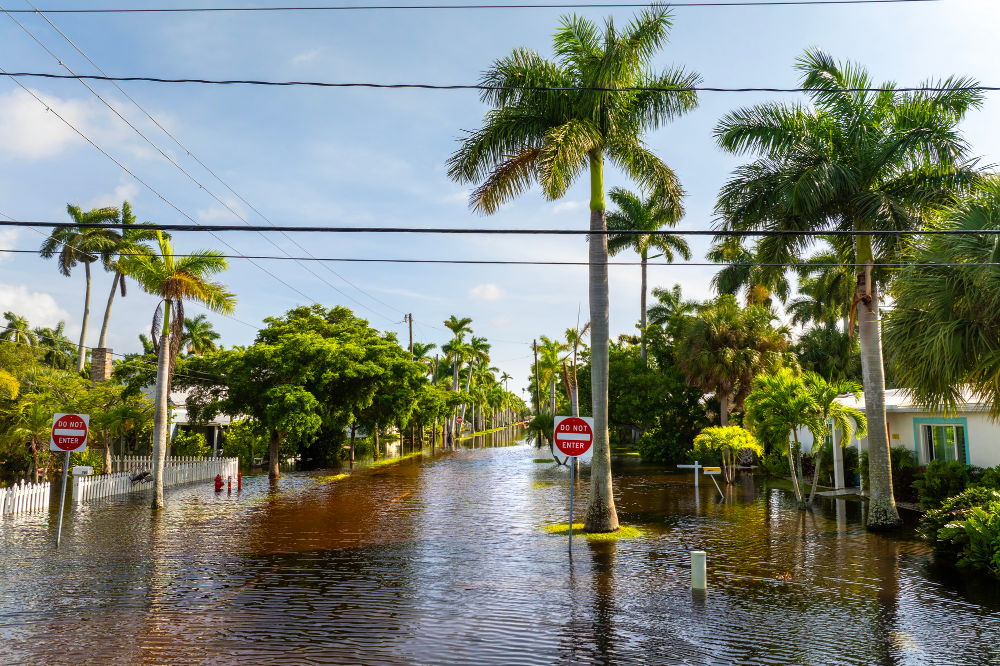
The people who run Florida’s storm response do not prepare in June. They prepare all year.
The Florida Division of Emergency Management runs a statewide program called Florida’s Training for Emergency Management, built to standardize how the state’s emergency managers and response partners are trained. Structured course tracks, an annual symposium, a graduate fellowship. The premise is that readiness is a system you build over months, not a scramble when a cone shows up on the news.
Most homeowners never get that version. They get a supply kit checklist in late May and a text message in September. The same agency publishes free Florida hurricane preparedness resources aimed directly at households, and most people have never opened them.
Four State Resources Worth Bookmarking
Know Your Zone, Know Your Home. Your evacuation zone is based on storm surge risk and assigned by your county. Your flood zone is a FEMA insurance designation. They are not the same thing, and confusing the two is why some homeowners evacuate unnecessarily and others stay put when they should not. The tool also asks what your home is made of and when it was permitted, which is the half everyone skips.
Alert Florida. Connects you to your county’s official notification system. Evacuation orders, shelter openings, and road closures arrive from the agency actually issuing them instead of secondhand through social media. Register every adult separately. Alerts follow the person, not the address.
The Florida Hurricane Guide and supply checklist. Better than most of what circulates online because it is Florida-specific. One underrated item: photograph and back up your insurance declarations page, wind mitigation report, roof permit, and product approval numbers. In a claim, those documents do more for you than a case of bottled water.
The Special Needs Registry. If anyone in your household has a medical condition, mobility limitation, or equipment that needs power, register them. Counties use it to plan transportation and special needs sheltering. It is free, it is not automatic, and it has to be renewed.
All four live on floridadisaster.org, along with a directory of all 67 county emergency management offices. County-level information is what you actually act on.
The Gap These Resources Do Not Close
Every tool above helps you respond to a storm. None of them change what happens to your house when the wind arrives.
A supply kit and an evacuation plan protect your family. They do nothing for a 22-year-old roof or an unrated garage door. Once an opening gives way, the storm is inside the building envelope, and internal pressurization is what lifts roof decking off trusses. Most catastrophic residential losses in Florida start at a window, door, or garage door rather than at the roof itself.
There is a second cost that arrives long before any storm. Florida insurers price policies off roof condition and opening protection. An aging roof or unprotected openings can mean higher premiums, a failed 4-point inspection, or a non-renewal notice. That happens in calm weather.
A Quiet Season Is Not the Same as a Safe One
NOAA’s August update called for a below-normal 2026 season, roughly seven to 13 named storms, with a 75 percent chance of below-normal activity driven by El Niño. As of late August, two named storms and no hurricanes.
Read that correctly. A seasonal forecast describes how many storms form across an entire ocean basin. It says nothing about your address. Hurricane Andrew came in a below-normal year.
Insurers do not price your policy off a forecast either. They price it off your roof age, your opening protection, and your inspection reports, none of which improve on their own during a slow year.
What Home Hardening Actually Means
The term gets used loosely. In Florida it comes down to four systems:
- Opening protection. Impact-rated windows, doors, and garage doors, or approved shutters. Products must carry a state approval number, and Miami-Dade and Broward sit in the High Velocity Hurricane Zone, where the testing standard is stricter than the rest of the state.
- Roof covering. Age, material, and whether it met code at installation.
- Deck and attachments. How sheathing is fastened to trusses and how the roof ties into the walls. Clips and straps perform very differently from older toenail connections.
- Secondary water resistance. A sealed layer that slows water intrusion if the covering comes off.
Two things worth knowing. Most of these items are recorded on the state’s uniform wind mitigation inspection form, which is what your insurer reads. Work that never makes it onto that form may not move your premium at all. And deck and attachment upgrades cost far less during a reroof than as a standalone job, so sequencing matters.
Two Programs With Money Attached
Sales tax on impact products. Under HB 7031E, homeowners can recover sales tax paid on qualifying impact-rated windows, entry doors, and garage doors on homesteaded property, up to $500 per residence, for purchases on or after July 1, 2026. Generally requires an active homestead exemption and a just value at or under $700,000. Keep your contract, invoices, product approval paperwork, and permit records. Confirm current filing procedure with the Florida Department of Revenue.
My Safe Florida Home. Free wind mitigation inspections and matching grants up to $10,000. Eligibility is limited to low and moderate income households, the home generally must be homesteaded and permitted before January 1, 2008, and roughly 45,000 homeowners with completed inspections have been waiting on funding. Check the program’s site for current status before building a timeline around it.
Florida trains its emergency managers year-round because readiness is a system, not a weekend. The same logic applies to a house.